
West Country Mysteries

The Wounded Thorn
Hilary and Veronica make a shocking discovery at the Chalice Well in Glastonbury.
The peace of the ancient pilgrimage site is shattered by the violent events which follow. Does the threat come from the prancing pagan, the burka-clad student, or the angry local?
“cleverly crafted mystery thriller”

The Wounded Snake
When Hilary and Veronica sign up for a crime-writing weekend, they do not expect fiction to become reality.
Hilary is drawn to the mysterious Leech Wells, with their presiding spirits of Toad, Snake and Long Crippler, while Veronica overhears a threatening conversation behind the yew trees.
What happens next exceeds their worst fears.
“The plot twists will keep readers guessing as they turn the pages.”
Aidan Mysteries

The Hunted Hare
The peace of a remote Welsh pilgrimage site is shattered by a violent murder. Can Aidan and Jenny find the killer as they face the imminence of Jenny’s death? Their young daughter Melangell may hold the key, but she goes missing.
“Fiction Book of the Year”
– Christian Resources Together
“Don’t miss this fantastic mystery novel.”
– eden.co.uk
Lion Fiction

Death on Lindisfarne
Aidan makes a painful journey, bringing young Melangell to Lindisfarne, where he last came with her mother. Lucy is leading a course on Northumbrian saints. She has her own frightening memories of the past. They are thrown together as they search for the killer in their group.
“She creates such a feeling of the atmosphere of this Northumbrian island.”
– Crediton Country Courier
Lion Fiction
The Suzie Fewing Series

In the Blood
A family history investigation brings the violence of the past dangerously close to Suzie’s teenage son.
Severn House Publishers

A Malignant House
Suzie gets the run of the document chest in a stately home, but discovers that violent conflicts are not confined to the 17th century Civil War. She has put herself in danger.
“British Crime Club Pick”
– Poisoned Pen Booknews
Severn House Publishers

Those in Peril
The Fewings investigate Nick’s heroic lifeboatman ancestor. But they also turn up darker stories. There are disturbing links with crime in coastal waters today. Curiosity leads to young Millie and her cousin going missing.
“Brisk pace, tense climax, and distinctive characters.”
– Publishers Weekly
Severn House Publishers
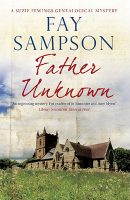
Father Unknown
While Suzie and her American friend investigate an illegitimate baby from the past, a pregnant teenager goes missing. Can they find her before worse happens to her?
Severn House Publishers
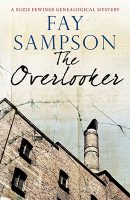
The Overlooker
A trip to Lancashire, to research Nick’s ancestors in the cotton mills, puts the Fewings in unexpected danger.
Severn House Publishers

Beneath the Soil
A murder takes place at a farm the Fewings visited the day before. Do they hold the clue to the killer? Suzie, Nick and their son Tom pursue the secret inheritance in the woods and Suzie puts herself at risk.
Severn House Publishers
Morgan le Fay
Originally published as Daughter of Tintagel
“Gripping… unputdownable.” – Evening Herald
“Poetic and magical” – Million
ebooks available from Google Play.

Wise Woman’s Telling
Morgan’s pagan nurse tells the shocking story of Arthur’s conception and the impact it has on young Morgan.
Cosmos Books

Nun’s Telling/White Nun’s Telling
The nun Luned tells how the teenage Morgan is banished to the convent on Tintagel. Few expected that she would learn witchcraft there. Luned finds herself in grave danger from her wilful charge.
Cosmos Books

Blacksmith’s Telling/Black Smith’s Telling
A magician smith of the old faith relates how Morgan comes north to marry his king. He challenges her power, at a terrible cost. Morgan makes a heartbreaking discovery about her brother Arthur.
Cosmos Books

Taliesin’s Telling
Morgan’s young bard Taliesin tells how he longs to sing of Arthur’s battles, but fears he was born too late. When Arthur’s son abducts Queen Gwenhyvar, it leads to a battle no one wants. This is not the song Taliesin dreamed of. Morgan holds her wounded brother’s fate in her hands.
Cosmos Books

Herself
Now it is Morgan’s turn to tell her own story. She pours scorn on all those who have retold it since, changing her from wise and healing ruler, to wicked witch and failed seductress.
Cosmos Books

Reflection on the Tintagel novels
I recognise two well-springs for my Arthurian fiction: poetry and place. In adolescence, I was enchanted by the Idylls of the King and the ruins of Tintagel Castle.
Interestingly, neither of these sources led me to the subject of this study: Morgan le Fay. Tennyson makes no mention of her. The heritage industry of Cornwall celebrates Arthur and Merlin, not Morgan.
For me, early ignorance is creative. A powerful motive for my writing is curiosity: the incomplete fragment, the action which demands explanation, the “what if?” To discover, in adulthood, fresh light on something I thought I knew makes me want to detain the wedding-guests on the doorstep and demand that they listen to my story.
A picture book shared with my small daughter opened my eyes to Morgan. It told of Morgan’s theft of Arthur’s scabbard, his pursuit of her through the forest, Morgan turning herself and her company into stones and casting away the scabbard of healing. I sensed I had discovered someone significant.
I hadn’t read Malory then. It was from Roger Lancelyn Green’s children’s version, King Arthur and the Knights of the Round Table, that I learned more. It opens with the slaying of Morgan’s father and the magical seduction of her mother, both required for the conception of Arthur by Uther Pendragon. I was then a writer of children’s novels, a teacher and a mother. I saw immediately how the orphaned young Morgan must feel about that baby half-brother. My concern was for Morgan the child, not yet for the woman she became.
I read the startling sentence: …she was sent to school in a nunnery; yet, by some means, she learnt much magic, which she used wickedly.
This conjured up images which formed the inspiration for a novel. That remained unpublished, but later evolved into the five-volume sequence,Daughter of Tintagel. Four people tell Morgan’s story: two women, two men, two pagan, two Christian, two sympathetic, two hostile. Lastly, Morgan speaks for herself, and ironically comments on all the writers who have used her story for their own ends.
Other Historical and Fantasy Novels

The Silent Fort
The Roman army is advancing on Devon. The Celts clash over whether to collaborate or resist. Melwas demands a warrior’s weapons, though he is too young. His sister Cairenn is on the brink of marriage to the chief’s son, Aidan the Red Fox, when he disappears. Brother and sister plunge into danger, as male and female druids compete for the soul of the tribe and the Romans march closer.
Robert Hale – 0 7090 7455 7

The Land of Angels
The Roman missionary Augustine lands in pagan Kent and finds an ally in the feisty Christian Queen Bertha. It proves a dangerous partnership for both of them.
“The novel is elegantly written in literary prose, with lyrical description of landscape and religious rites, set in a fascinating and neglected period of British history.“
– Carla Nayland Historical Fiction
Sensitively written with a solid basis in history, we meet – and in some cases come to love – Queen Bertha, Pope Gregory, Archbishop Augustine, and other key players.
Vince Rockston. http://shepherd.com/book/the-land-of-angels
Robert Hale
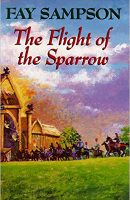
The Flight of the Sparrow
The story of the Edwin, who rose from a hunted exile to become the great king of Anglo-Saxon Northumbria, and his bitter feud with his Celtic foster-brother Cadwallon of Gwynedd. Edwin is torn between his loyalty to the old Germanic gods, the Celtic Christianity he found in Wales, and the Roman Church of his young queen. Should the great king confess that he is an apostate or be baptised again?
“Fay Sampson’s writing is beautiful, powerful, entrenching the reader in Dark Age Britain.“
– Historical Novels Review
Robert Hale – ISBN: 0-7090-6402-0

A Casket of Earth
Alchfled, a Northumbrian Christian princess, is married off to the son of the fearsome pagan king of Mercia. She finds herself caught in a web of intrigue and murder, as her father’s army prepares to attack her father-in-law. Into this dangerous situation comes the Celtic saint Chad.
“Once again Fay Sampson has interwoven plot and subplot into an intriguing tale of political passion, malice, love and revenge.”
– Historical Novels Review
Robert Hale – ISBN: 0-7090-6054-8

An Island Pilgrimage
Margaret and her minister Brian bring a group of teenagers to a holy island in the Hebrides, where the barrier between the spiritual and physical is thin. As they explore the story of Columba, they find themselves crossing one threshold too many. Back home, Margaret must try to keep the peace between her husband and Brian and decide what they should do.
Robert Hale – ISBN: 0-7090-7660-6

Star Dancer
The oldest written stories in the world are found on fragments of clay tablets in Sumerian cuneiform. This wealth of myths of Mesopotamian gods and goddesses has been gathered together here around the powerful central figure of Inanna, Lady of Love and War. At the climax of the story she descends to the Netherworld, to challenge the power of its terrifying Queen Ereshkigal.
“Outstanding fantasy.”
– Oxford Mail
Headline – ISBN: 0-7472-0661-9 hardback, 0-7472-4150-3 paperback